Friends and Strangers
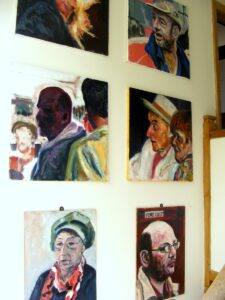
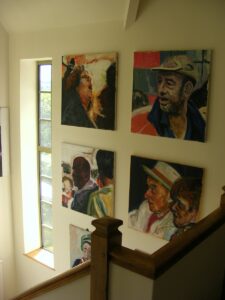

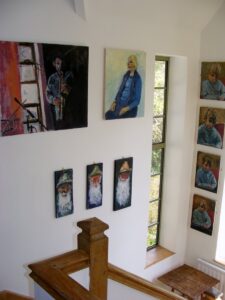
The first public outing of my work, this Open Studio event included an exhibition of portraits and poems, a meditation upon gardens and gardening in the form of a video installation, called ‘Compost’, a second installation titled ‘Articipation’, and the transforming of my studio into a faux museum exhibit titled ‘Studio’.
__________________________________________________
May 2017 – SITE Festival Nailsworth – Open Studio Exhibition
Dialogue between Word and Image
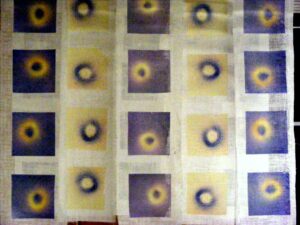
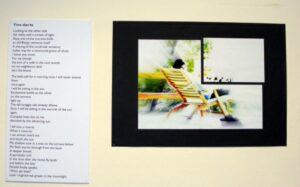
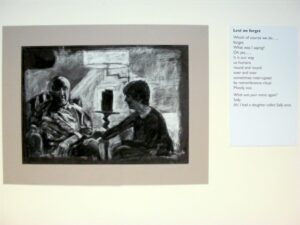
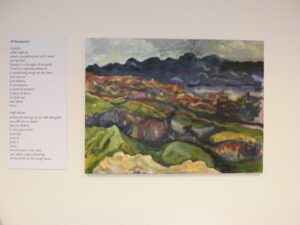
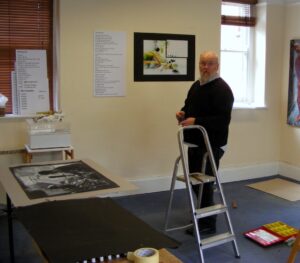

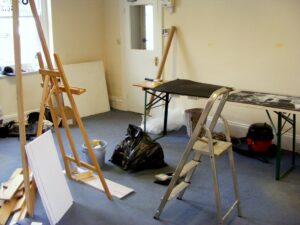
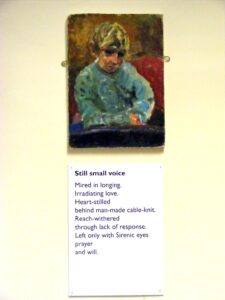
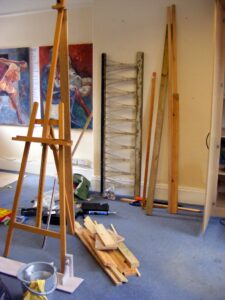
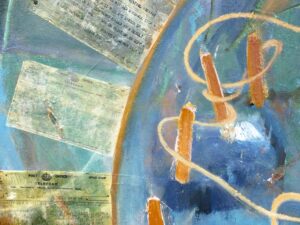
This exhibition was a collaboration with friend and poet David Slattery that was the result of conversations about the similarities and differences between our chosen art forms. Each gave the other five pieces of work to absorb and digest, with the intention of creating a response to the work through our own medium. Thus,10 pieces of work were created that incorporated both visual and written elements.
In my own responses to David’s poems, I tried to remain open to whatever media and visual forms might suggest themselves and to follow these threads through to a conclusion in each case. The outcome was a diverse mix that included photography, sculpture, textiles, and small installations incorporating video and sound.
July 2019 – Lansdown Gallery (Stroud)
Outside In(Side) Out
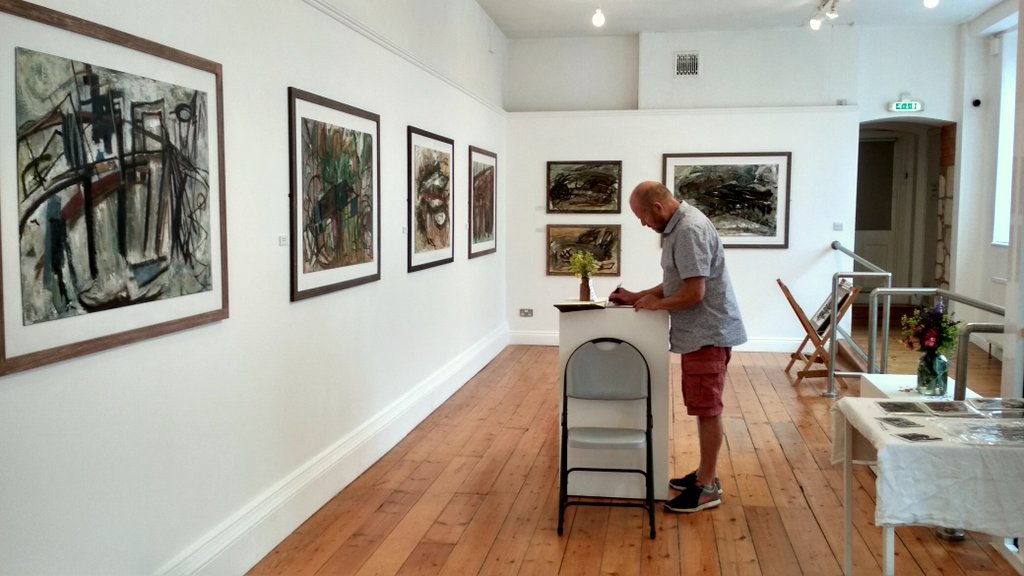
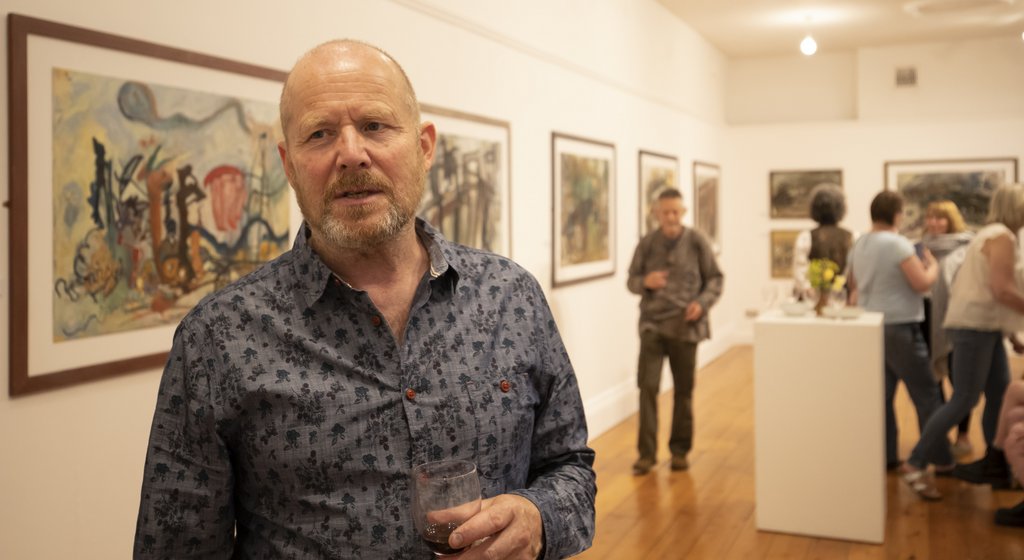
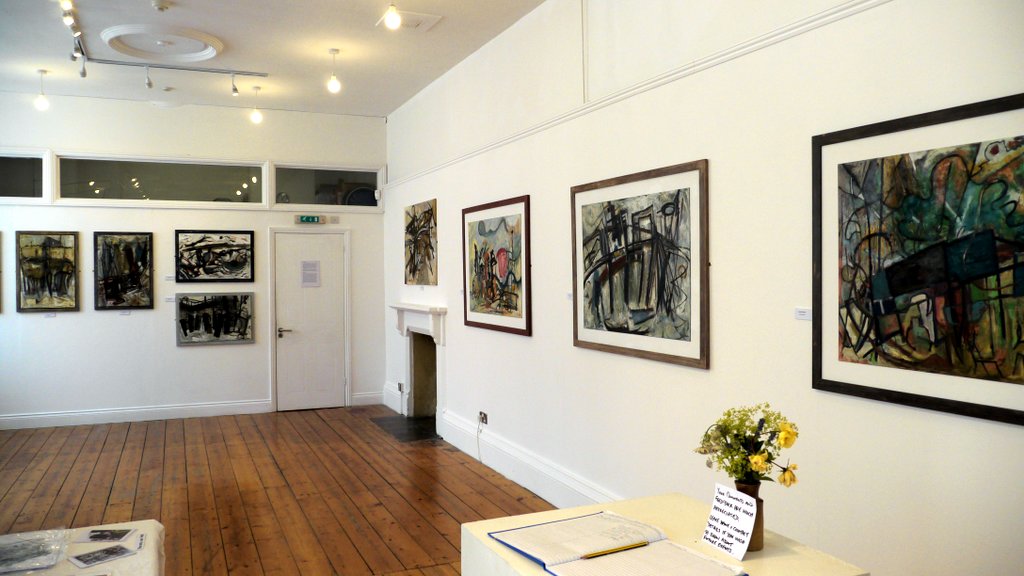
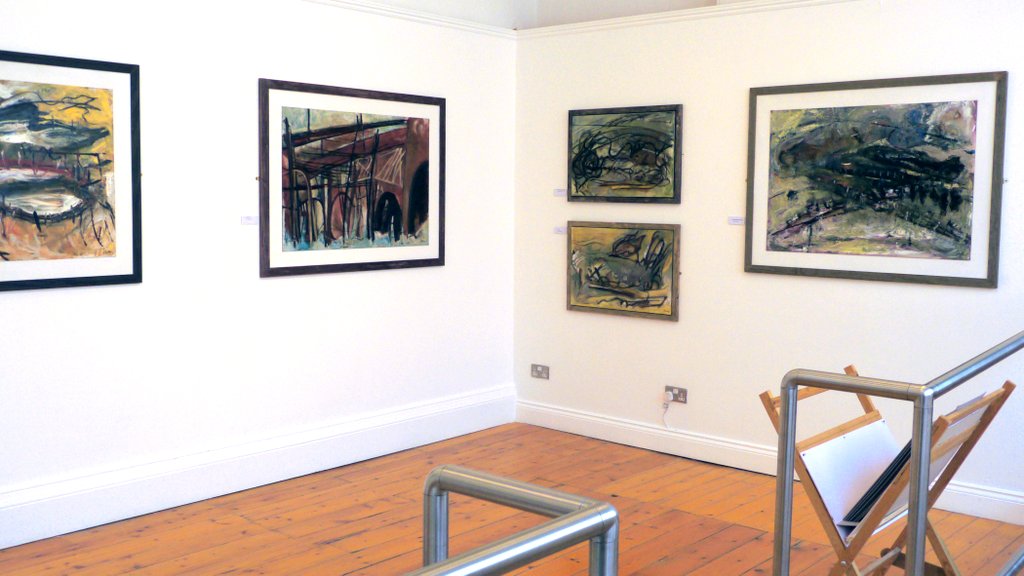
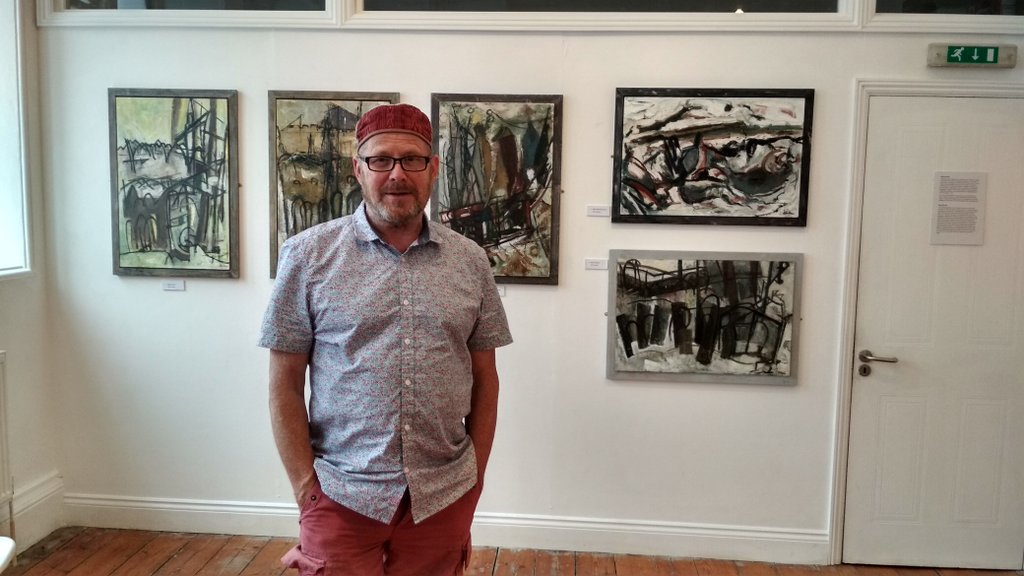
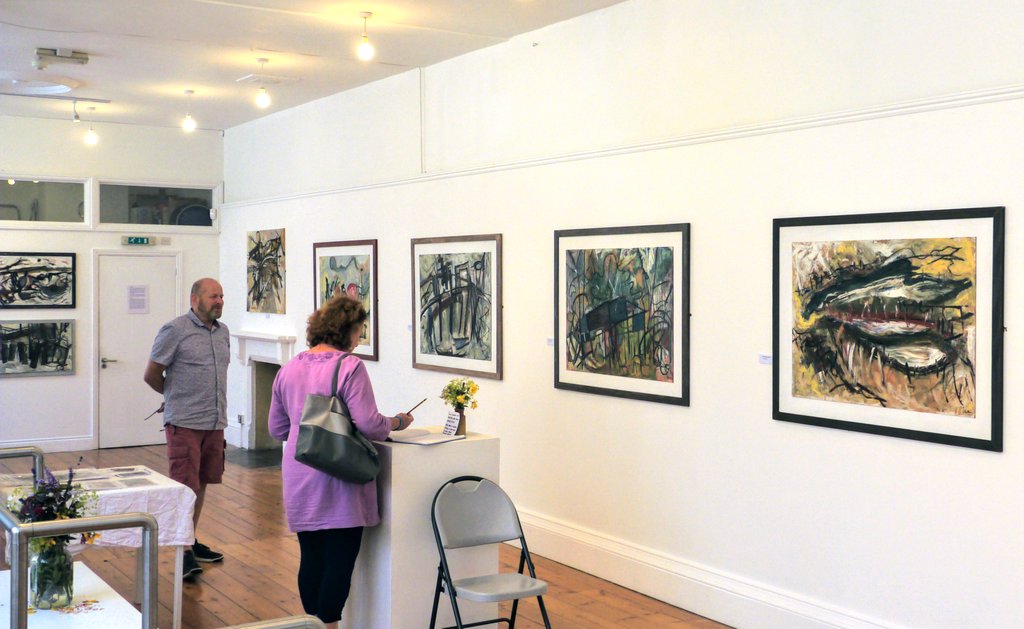
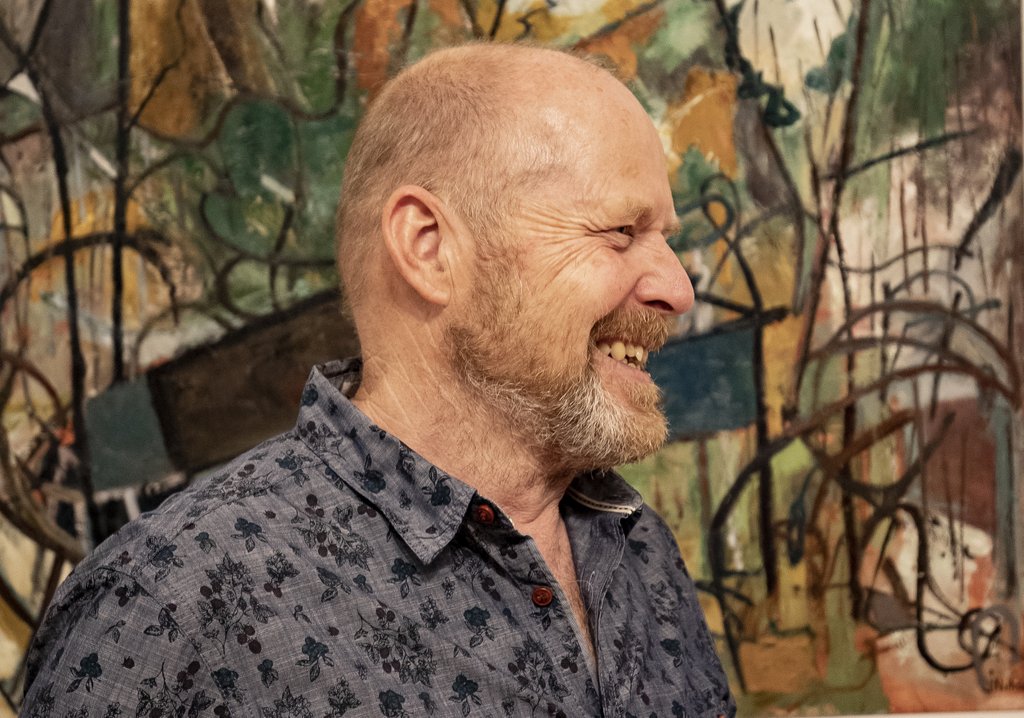
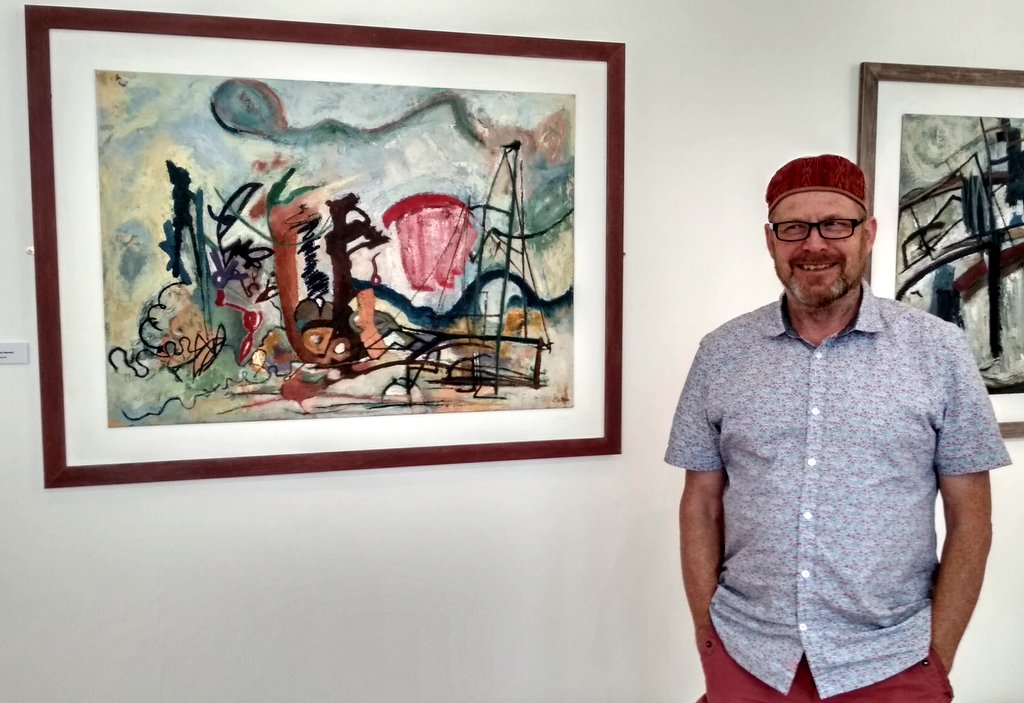
“In the paintings for my exhibition Outside In(Side) Out I try to capture my sensory and emotional responses to a particular place at a specific moment – a place that excites and inspires me in some way. I have developed a process through which I make a series of ‘blind’ monochrome charcoal drawings in situ that express a multi-sensory response to the place. (This means that I don’t look at the drawings as I make them, thus interrupting the critical feedback loop, and allowing a more spontaneous and uncensored act of mark-making to take place). These gestural drawings, together with my memory of the experience, create a starting point and structure for the production of abstract oil paintings in the studio. Sometimes the paintings remain true to their origin and sometimes other forms and meanings emerge through the process of painting. I hope to create paintings that are layered and textured, and that transmit an energy that does justice to my original experience of place, whilst remaining sufficiently ambiguous and abstract in their form to allow the viewer to project and discover their own meanings and forms in the image.”
_____________________________________________________
September 2021 – Woodchester Mansion (Nympsfield, Nailsworth)
Floating Flaws @ Woodchester Mansion
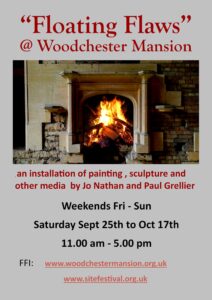
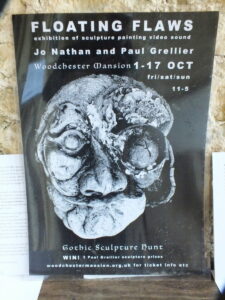
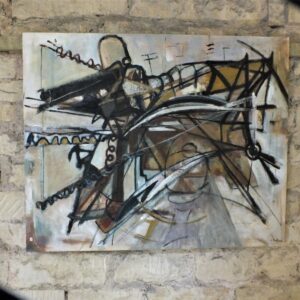
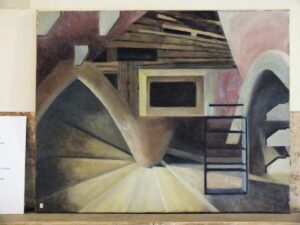
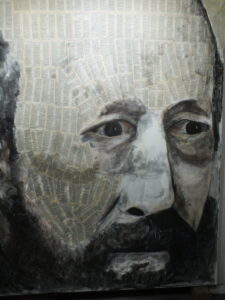
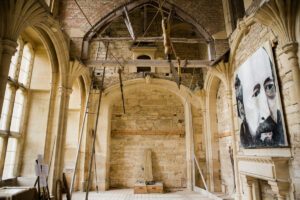
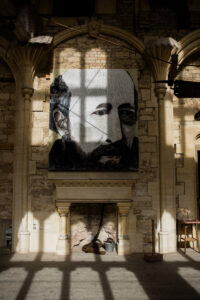
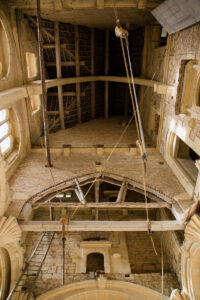
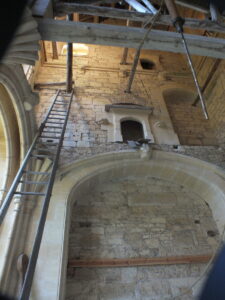
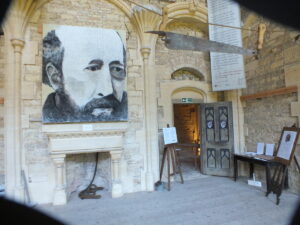
“Woodchester Mansion inspires contradictory feelings in me, as I am impressed by its magnificent scale and fine craftsmanship, whilst at the same time being affected with a deep sense of sadness and desolation at the ‘stillborn’ nature of William Leigh’s grand enterprise. This reflects a seeming contradiction in the man himself, humble and devoted to his faith and his family, whilst also driven by a grandiose and unrealistic vision, which inevitably collapsed under the weight of its own expectations.
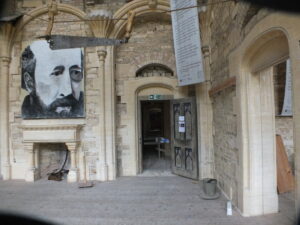
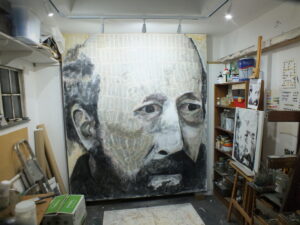
My work seeks to pay tribute to William Leigh the visionary – ‘lighting a fire’ in the cold heart(h) of the house through music, sound, and image – whilst acknowledging the ultimate flaw and destructiveness inherent in his singular religious idealism. A huge 7′ x 8′ portrait of the founder surveys the scene from above the fireplace in the soaring, flawless (sic) central structure, his gaze accompanied by a haunting soundscape emanating from the vaulted upper reaches of the space. Several paintings (including the ‘House of God’ series) adorn the walls of the adjacent corridor, leading onto a video installation in the dark depths of the servant’s quarters.“
The Portrait: a multi-media collage drawing, comprising charcoal, pastel, acrylic, and several hundred pages from the catholic bible.
The Soundscape: lasts for 24 minutes, one minute for each year the house was under construction, and seeks to portray the different, and at times conflicting, elements at play (spiritual, material, social, and personal) in the conception, creation, and ultimate abandonment of William Leigh’s grand project.
The choral music in the Soundscape uses elements of the Catholic Mass composed by Tallis, Byrd, and Palestrina; music which William Leigh may have envisaged echoing through the domestic corridors (though he was apparently quite conservative in his musical tastes and might have preferred simple Plainsong!) Although it resembles the vaulting grandeur of a cathedral, the main exhibition space has, in actuality, an almost dead acoustic, and in order to create the desired church-like resonance the music was re-recorded in the kitchen and scullery of the house, a space with a beautiful resonant acoustic. I also experimented with re-recording the choral music, several times over, from within the kitchen space, a process which results in weird distortions as the architectural space starts to impose its own particular influence on the sound.
Some of the sounds of tools were recorded live in the basement of the house and you may also spot old recordings of steam traction engines which would have been used in the construction of the house. The signals and calls of resident bats and rooks, along with other birdsong and natural sounds, have also been utilised in the creation of this soundscape.
The Video Installation: In the darkest, dankest reaches of the house, the beautifully crafted, virgin fireplaces that array the precipitous walls of the floorless building come to life and at long last fulfill their purpose in providing warmth and a convivial atmosphere to the imagined human occupants.
Employing flying drones and a bit of Harry Potter magic, this piece of whimsy offers a brief glimpse of what might have been…..
_______________________________________________________
Visions of Bardsey


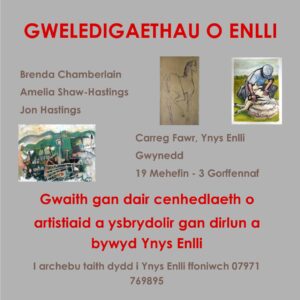

The Paintings Click here to see a short video of the exhibition
‘Visions of Bardsey’ – Story
There was once a young boy, the third of four brothers, whose mother became ill for a time and unable to look after them all. The baby could not be left, and the older brothers needed less attention, so the boy was sent away to stay with the family of the mother’s older sister. He had never been away from his family before, and the aunt seemed rather strict and scary, and the family customs strange and confusing. It transpired that the aunt and her young daughter were going to travel to a far-away place for a holiday and that the boy was to go with them. They journeyed by night in the back of a jeep, over rough and narrow roads, through a bleak mountainous landscape unlike anything the boy had ever seen. They arrived in the morning in a small village set amongst rugged cliffs and sandy bays, where many of the people spoke in a tongue unfamiliar and unintelligible to the boy. But the travellers had not yet arrived at their destination, and soon they boarded a small open boat which headed out to sea, pitching and rolling alarmingly as it rode the fearsome swell and fought the powerful currents. The old boatman sat at the tiller in his cap and waders, chewing tobacco and saying little. As the boat rounded the headland, a distant island came into view, and to the boy it seemed hunched, grey, and forbidding. This surely could not be the place they had journeyed so far to reach. It appeared to the boy more like a place of exile than a holiday destination, and he felt abandoned and forsaken.
But as the small boat chugged its way past the steep hillside flocked with crying seabirds, and turned past the point into a calm, wide bay, a different island came into view. A bright red and white lighthouse, families of seals swimming and spilling off the rocks, a tiny, sheltered harbour with more wooden boats pulled up on the beach, an ancient boathouse, and a single farm track winding its way up through gentle rolling fields towards a scattering of farmhouses. And so, at the very moment of his despair, the boy entered a storybook world and fell in love with it, a love that was to endure a lifetime. The house he stayed in had none of the comforts or conveniences of home, but was cosy, with a roaring fire and oil lamps to light the dark nights, a pail of fresh milk from the cow every morning, and the enjoyable chore of collecting the cool, clean water from the well at the foot of the mountain. The gently spoken farmer next door called him ‘ducky’ and showed him how to feed a trio of abandoned lambs with milk from a baby’s bottle. There were fat pigs in the sty, chickens in the yard, sheep in the fields, a huge but placid bull, an old Shire horse called Prince, and a lonely, mad cow called Buttercup who had to have a field to herself as she would chase the other cows. After stormy weather, the whole household would brave the buffeting wind and go looking for ‘broc’ (wooden flotsam or jetsam washed up onto the rocks) to provide wood for the fire, dragging it above high-water level in order to claim the prize. The boy spent his days swimming, exploring, climbing rocks, and playing with his cousin in the tall, soft bracken that covered the mountainside, his fear and sadness banished to his unconscious by the magical power of the strange island.
********************
The man was walking the perimeter of the island on a fresh summer’s evening, the squally day now calmed by the drooping orange ball as it sank slowly towards the horizon. He was reflecting upon the imminent arrival of his eighth decade, and as he walked, his mind wandered through his memories of numerous past visits……. memories which stretched back over sixty years to his first momentous introduction to the island. Subsequently, every school holiday would be spent there with his whole family – mother, father, and 3 brothers – and for a time his parents had even taken up a lease on one of the houses. After he had created a family of his own, the man returned with his own children, and when they grew up, they came with their children. The man reflected on how important this place had been to him; how, throughout his life, it had given him so much and provided him with a constant and reliable anchor point. But he also wondered how much of a one-way process this may have been and began to feel that he would like to do something tangible in return – to offer something back that others might value and appreciate.
In the later part of his adult life, the man had discovered his interest in art and had developed an art practice that included drawing and painting. In his last few visits, he had made rough, expressive drawings of many island locations, which he was now working into a series of semi-abstract oil paintings back in his studio. When considering where he might exhibit these paintings, he had the fleeting thought that he would love to show them on the island and share them with the great number of people for whom the island was also a very special place. He initially dismissed this as a somewhat crazy, whimsical, and unrealistic idea, but a seed had been sown, and the idea started to grow.
********************
Boy (Jonathan), man (Jon Hastings), and artist (Jo Nathan) are, of course, one and the same, and you will no doubt have guessed that the central character in this tale is the ‘magical’ island of Bardsey/Enlli. So, to continue…….
Once the exhibition idea had taken root in me, tentative approaches were made to the Trust and to the island residents, and to my surprise and delight, the idea drew a largely positive response. Encouraged by this support, I took the idea more seriously and began to work out the complex logistics of how and when such an event could be realised. A location would have to be decided upon and secured; an exhibition space would have to be specially constructed without the help of a power supply, and all the building materials plus artworks would be transported by van and then by boat. The vicissitudes of the weather would have to be taken into account. The event would need to be publicised, promoted, and supervised, but would also need to fit in with the busy weekly rhythm of island life. Ideas about the nature of the exhibition were also evolving and expanding.
My mother Amelia had been a talented professional artist, and during my childhood family visits, she would love to draw the island’s landscape and seashore, animals, people, activities, and events. With the help of my younger brother, Malcolm, a selection of these drawings was retrieved from our mother’s archive, and together we decided that this work, never before exhibited, would both contrast and complement my paintings and provide a fascinating window onto island life during the 1960s. Overcoming his initial scepticism, Malcolm came onboard the project and took on the substantial task of mounting and framing Amelia’s drawings to make them ‘exhibition-ready’. The overall theme was now taking shape and fell into place when I decided to mount the exhibition at Carreg Fawr, which, besides having the best natural light of all the island houses, is already home to several beautiful murals painted by the celebrated artist Brenda Chamberlain. Brenda’s departure to the warmer climes of the Aegean overlapped my family’s arrival on Bardsey by a year. “Visions of Bardsey” would be the title, and it would represent 3 generations of artists “inspired by the landscape and life of the island”.
*********************
Taking advantage of a brief window in the stormy weather, we set out from Porth Meudwy in Benlli III at 7 am on Saturday, 15th June. Laden with timber, tools, paint, and 30 sheets of OSB board, with all the artwork carefully boxed and wrapped and stowed in the boatman’s cabin, the Gods still made one final effort to discourage us as, mid-Sound, the skies opened up and drenched us all in freezing rain. However, the welcoming party at the Cafn made short shrift of unloading the cargo into the Stwrs and up to Carreg. Utilising the rear garden at Carreg as an outdoor workshop, half of the house was transformed into a white gallery space, with free-standing timber frames supporting the painted boards. No wall fixings were permitted due to the fragile state of the plaster and the conservation status of the houses. Malcolm’s skills and prior experience at mounting exhibitions for his students (plus a fine array of battery-powered tools) proved indispensable, and after three days, we were almost ready, with the artworks hung.
But just as we made last-minute preparations to open the following day, fate was to tragically intervene as island resident Lofty suffered a terrible, fatal accident at the gateway to the house. The shockwaves reverberated throughout the island, and in the wake of such a terrible event, our artistic endeavours suddenly seemed insignificant and irrelevant. After days of wild and windy weather, the following morning greeted us with a cloudless sky and an uncanny stillness, as if the island itself was in a state of mourning. The people moved slowly and quietly and spoke gently to one another. We considered abandoning the project altogether, but after all the work and preparation involved, this seemed such a waste, so we decided we would open the next day and just see what happened.
I woke rather late the following morning to the sound of calling and knocking on the front door. It was 10.00 am, opening time, and to my great surprise, there was a queue outside to see the exhibition. Throughout the day, people came and talked and shared and enjoyed the art and spoke their own stories and memories of Bardsey. Far from it being an irrelevance, the exhibition seemed to provide an informal gathering point where people could connect through the art to the island and to each other. And this continued in the coming days, with new weekly residents and day trippers dropping by and often staying to talk. I felt very moved by the level of interest and engagement, and the footfall over the 10 days that we were open was over 250, all of which far exceeded my expectations. Enough work was even sold to cover my costs, with some pieces staying on the island. I was especially touched when the aunt of one of the young island managers bought for her a painting inspired by Solfach beach, which now hangs on the wall in Ty Bach, the house where I stayed on my very first trip to Bardsey. The circle felt complete.
On the final day of the exhibition, I turned 70, and ate fresh lobster with my wife Lesley and eldest daughter Shelley, with the sun putting on a glorious show as it sank down beyond the Wicklow Mountains. Bardsey sunsets are legion, and throughout the whole trip, they did not disappoint.
October 2025 – Sub-Rooms (Stroud) The Bigger Picture
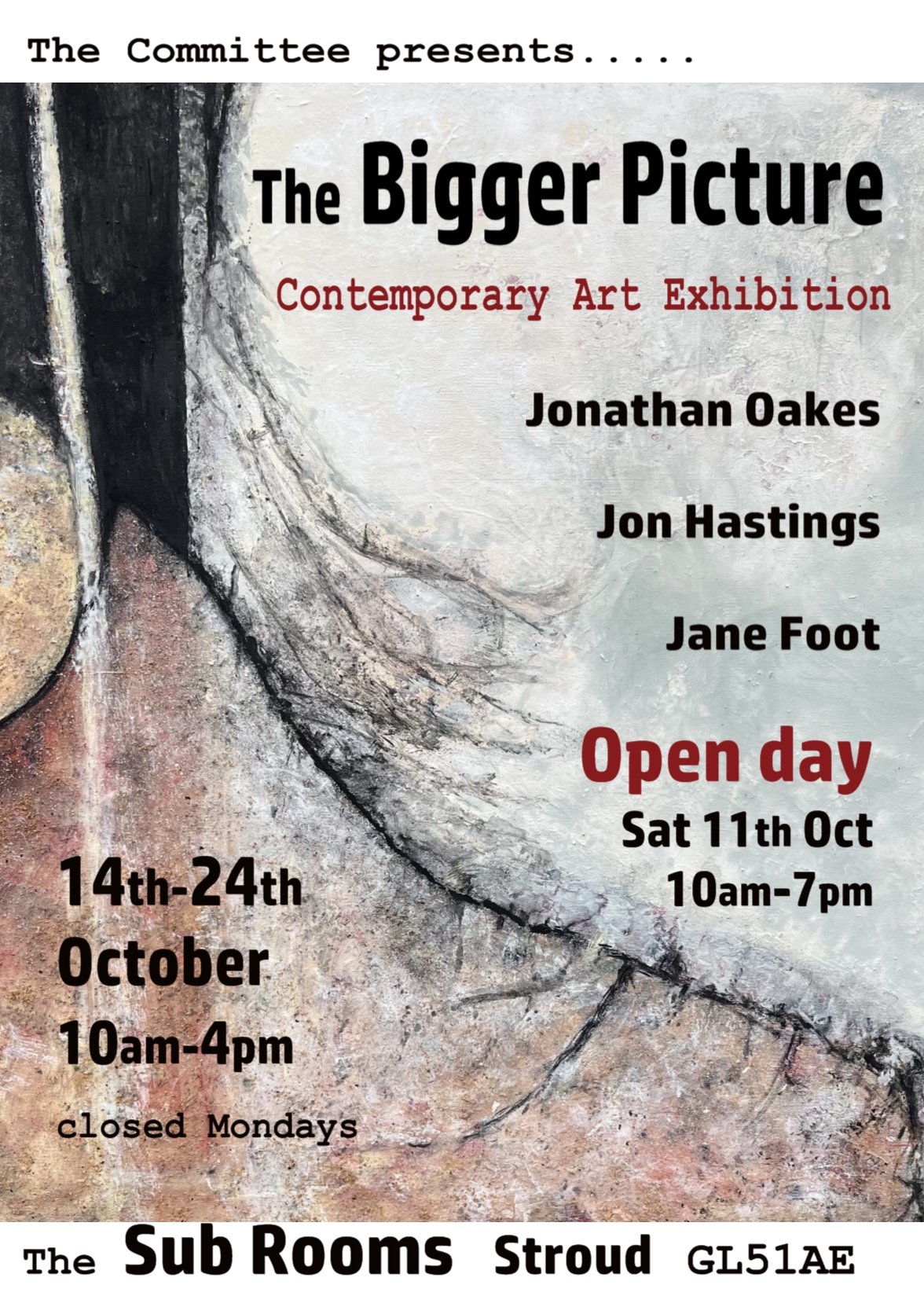
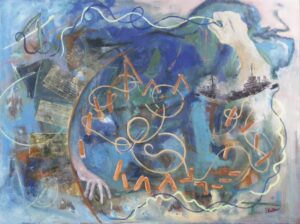
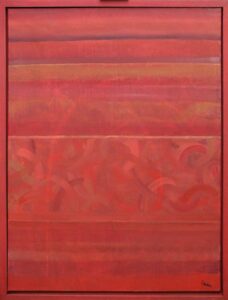
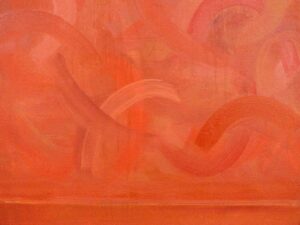
For my new series of paintings, Resonance, I have been using pieces of music that I particularly resonate with as the focal point of each work. This has been a new and experimental undertaking for me, one still in its infancy, that has involved very different approaches and tools in the mark and picture-making process. This is still evolving, but I managed to produce 4 new works for this exhibition
For each painting, I have immersed myself in the selected musical work, often listening to several different versions, allowing the music to penetrate emotionally, physically, and intellectually. I have tried to grasp the musical structure and researched the history and provenance of the piece. Moving between repeated focussed listening, and then having the piece playing in the background as I paint, a musical ‘cocoon’ is created for the artwork to develop and grow in.
The finished work is seeking neither to illustrate nor translate the music, but rather to answer the call of it; to find a response; to allow my understanding, appreciation, and love for it to generate something new, in a new medium, that has its own integrity whilst being deeply rooted in its musical source.